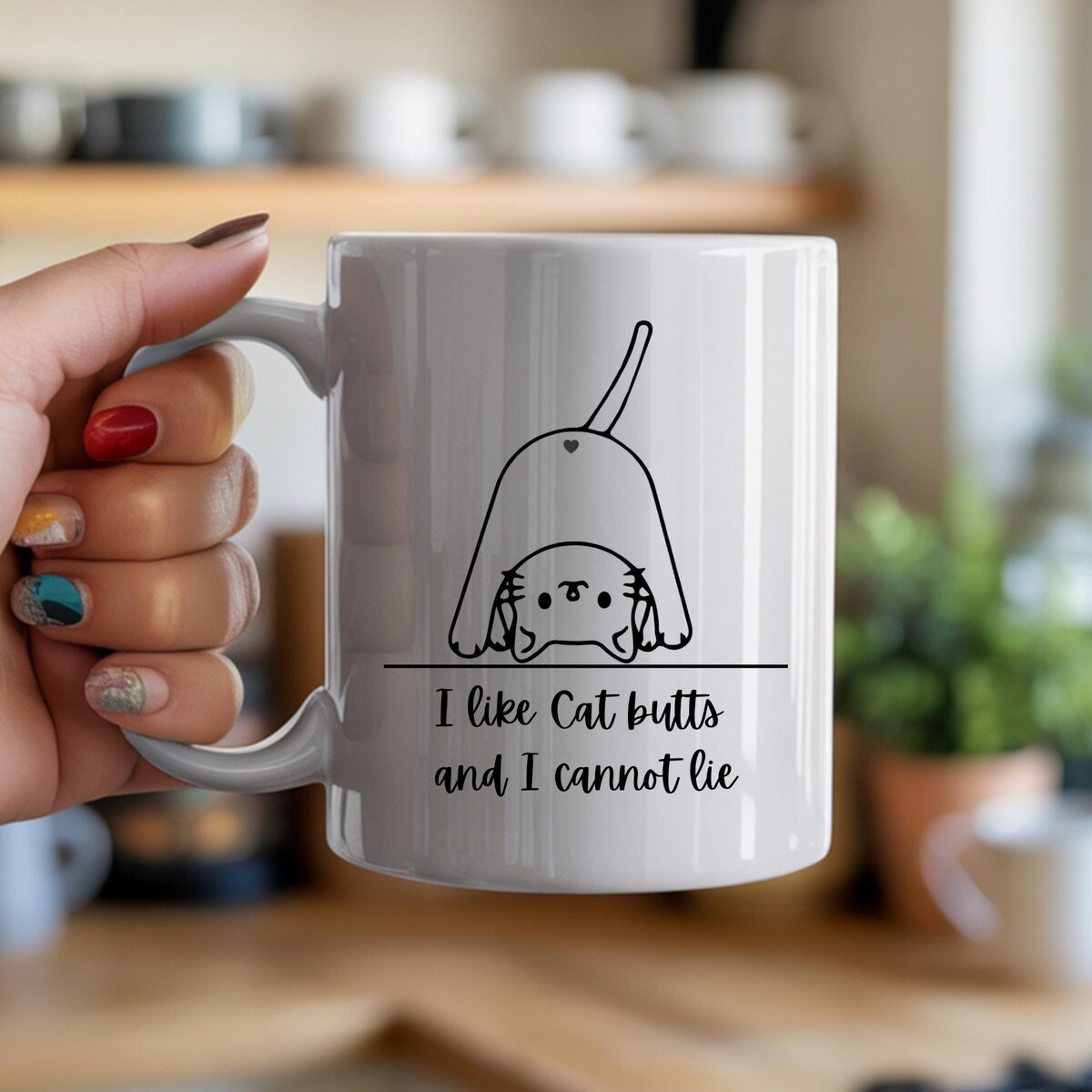
Cats love differently than dogs. Dogs announce it. Cats run a quiet, deeply specific signalling system that, if you don't know how to read it, can look like complete indifference. That mismatch is why so many cat owners spend years quietly wondering if their cat is just tolerating them out of contractual obligation.
Spoiler: they're not. The signs are there. They're just smaller.
Why this is harder to spot than it should be
Cats are descended from solitary hunters. Wild cats don't form packs, don't need a constant social broadcast, and don't have evolutionary pressure to perform affection. So when your cat loves you, the proof is usually in behaviours that look unremarkable until you understand what they mean.
The rule of thumb: a cat that voluntarily relaxes around you, exposes its body, and chooses your space over a safer alternative - that is a cat saying yes. Cats vote with their location and their posture.
The eight signs
The conversation in two blinks
1. The Slow Blink
Your cat looks at you, slowly closes its eyes, holds it, slowly opens them again. Sometimes called a cat kiss.
Means: active trust. In the wild, closing your eyes near another animal is a vulnerability move - it says I am not on guard with you. Slow-blink back and you'll often get another one in return. It is the closest thing cats have to saying out loud that they feel safe with you in the room.
The forehead deposit
2. The Head Bunt (or Head-Butt)
Your cat walks over and presses its head firmly into your hand, leg, or face. Often followed by a side rub.
Means: cats have scent glands on their cheeks and forehead. When they head-bunt you, they are depositing their scent on you and mixing it with yours. Translation: you are part of my colony. It is a claim. A nice one. The more enthusiastic the bunt, the more confident the claim.
The greeting
3. The Tail-Up Approach
You walk in. Cat walks over. Tail held vertically, often with a slight kink or hook at the tip. The full unsubtle reveal that gave this blog post its hero image.
Means: this one is fully scientific. The vertical tail is a friendly greeting cats only use for trusted companions - other cats they live well with, and humans they have decided are family. Kittens do it to their mothers. Adult cats save it for a select list. If you are on that list, you have been chosen.
The kitten reflex
4. Kneading (Making Biscuits)
Cat sits on you, on a blanket, on your dressing gown, and starts pushing alternate paws in a slow rhythmic motion. Sometimes with claws out. Sometimes accompanied by drool.
Means: kneading is a kitten behaviour. Kittens knead their mother to stimulate milk. Adult cats keep doing it in moments of deep contentment - usually only with people they are completely relaxed around. If your cat kneads you, you are being treated as a safe parental figure. The drool is involuntary and a compliment.
The location vote
5. Sleeping On or Near You
The cat chooses your lap, your chest, the foot of your bed, your laptop. Always specifically near you, even when warmer or more comfortable spots exist.
Means: sleep is when cats are most vulnerable. Choosing to sleep near you means they trust you to keep them safe while they're off-duty. A cat that sleeps on your chest is not asking for warmth - they are choosing you over everywhere else in the house. This is one of the strongest signals a cat can give.
The belly reveal
6. Showing You the Belly
Your cat flops onto their back near you, belly fully exposed, sometimes with a stretch and a slow blink for good measure.
Means: the belly is the most vulnerable part of a cat. They do not show it unless they feel completely safe. Important caveat: a belly-up cat is showing you trust, not requesting a belly rub. Touch the belly and many cats will reflex-grab your hand with claws and teeth. The belly is a display, not an invitation. Admire from a respectful distance.
The chirp
7. Trilling, Chirruping, and Specific Meows
A short, rolling, almost question-mark sound. Different from a meow. Often happens when you walk in or when they hop up next to you.
Means: trilling is a sound mother cats use to call their kittens. Adult cats use it for humans they consider family. The standard meow, interestingly, is almost exclusively a cat-to-human vocalisation - adult cats rarely meow at each other. If your cat has a specific greeting noise that only happens when you arrive, that is a relationship language they developed for you. Just for you.
The gift
8. Bringing You Things
A toy at your feet. A sock. A mouse, occasionally. The cat looks pleased with itself.
Means: debated by behaviourists, but the leading reading is that your cat is sharing the hunt with you - either teaching you a skill they think you lack, or contributing to the family stockpile. Either way, you are being treated as part of the colony rather than as a stranger. Accept the gift with thanks. Quietly dispose of it later.
What it does not mean if your cat doesn't do these
Cats vary wildly. Some are demonstrative slow-blinkers and head-bunters. Some show love almost entirely through location - they live in the same room as you and that is the whole declaration. Both are valid.
The things worth flagging are changes, not absences:
- A previously affectionate cat suddenly stops. Hiding, no greetings, no contact - especially with reduced appetite or energy - is worth a vet check. Cats mask pain by withdrawing.
- A cat that has never bonded after months in the home. Sometimes a trust issue, sometimes an environment issue, occasionally a personality fit. Not always solvable, but a behaviourist can usually help.
- Reluctance to be in the same room. Especially if there are new factors - another pet, a new person, a recent move - the cat may be communicating something about its environment rather than about you.
The cat behaviour team at PetMD have a vet-reviewed breakdown of the affection signals, and Purina UK covers the same territory with the science on slow blinks and tail signals if you want to dig in further.
The cats we live with
At The Cuddly Cat Company, the Big 6 each have their own love language. Crumpet is a hard-core head-bunter - cheek into shin, with feeling, several times a day. Moji is a sleep-on-you cat, full body contact, no negotiation, very heavy for her size. Delilah is the slow-blink queen - she rarely initiates contact, but if you catch her eye across the room and slow-blink, she'll send one back, and that, from her, is everything.
The truth, after years of cat servitude, is that the tail-up greeting is the one that gets us every time. Walk through the door and have a small, fluffy cat trot over with their tail straight up and a chirp - that's the cat saying yes, you specifically, I'm glad you're back. If you've enjoyed this, you might also like our breakdown of what your cat's poses actually mean in What Your Cat's Sleeping Position Actually Means, or the slightly less polite version of the stare in Why Does My Cat Stare at Me?